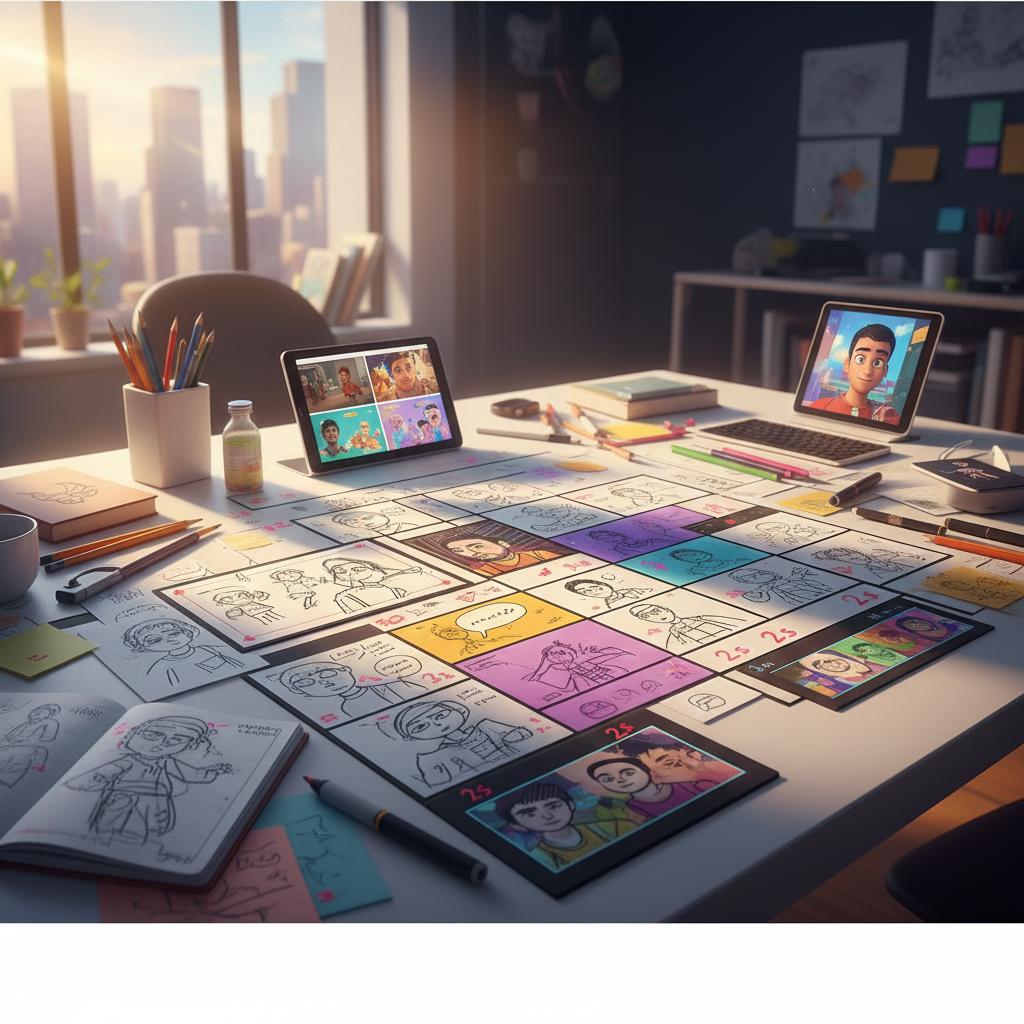

In 2026, AI design tools are no longer “nice-to-have” add-ons – they’re built into every stage of the creative process. From concept sketches to final UI prototypes, AI is helping designers move faster, explore more ideas, and stay consistent across platforms.
This one-page guide breaks down how AI design tools are evolving, how students and professionals can use them today, and where the technology is heading next.
Key Trends Shaping AI Design in 2026
1.Integrated AI inside core design platforms
Instead of separate apps, AI is now embedded inside tools like UI/UX suites, illustration software, video editors, and presentation builders. Designers can generate layouts, colour palettes, and components directly in their workspace with simple prompts.
2. Text-to-design workflows
Natural language prompts are turning into wireframes, mockups, and social media creatives. You describe the brand, audience, and goal; the AI suggests multiple design variations you can refine.
3. Smart brand consistency
AI tools can “learn” a brand style guide—logo, fonts, tone, imagery—and automatically apply it across new designs. This reduces repetitive formatting work and keeps multi-designer teams aligned.
4. Collaborative human–AI creativity
The most effective tools don’t replace designers; they support idea exploration. AI handles repetitive tasks and gives options, while humans make the strategic and aesthetic decisions.
Practical Applications for Designers & Students
1. Rapid prototyping for UI/UX
AI can:
- Generate wireframes based on a feature description
- Suggest user flows and screen states
- Auto-adjust layouts for mobile, tablet, and desktop
This allows product and UX designers to test more ideas before investing in detailed design.
2. Content and visual generation
Modern AI tools can:
- Create on-brand social media posts and ad creatives
- Produce custom icons, illustrations, and hero images
- Generate presentation slides aligned with design systems
Students can quickly visualise concepts for assignments, portfolios, and client demos.
3. Design systems and component libraries
AI can analyse existing designs and automatically propose:
- Component libraries (buttons, cards, forms)
- Typography hierarchies
- Colour tokens and spacing scales
This is especially valuable for scaling products or building professional-grade portfolio projects.
4. Accessibility and usability checks
AI can flag:
- Low-contrast colour combinations
- Overly dense layouts
- Missing alt text or poor content hierarchy
This helps designers create inclusive experiences from the start.
3. Skills Students Should Build Around AI Tools
To stay relevant in 2026 and beyond, students shouldn’t just “use” AI—they should learn to direct it. Key skills include:
- Prompt-writing and creative direction
Knowing how to brief AI clearly: purpose, audience, style, constraints.
- Critical design judgment
Evaluating AI-generated options and improving them with design principles.
- Brand and strategy thinking
Using AI outputs that support positioning, messaging, and business goals.
- Tool fluency & adaptability
Getting comfortable with multiple AI platforms and keeping up with updates.
4. Future Prospects: Where AI Design Is Heading
Looking beyond 2026, AI design tools are likely to:
- Offer real-time user feedback simulation, predicting how users might react to a layout or flow.
- Create fully personalised design variants for different user segments automatically.
- Integrate deeper with analytics so designs can be optimised continuously based on performance data.
- Support cross-media design, where one brief generates web, app, print, video, and 3D assets in a coherent style.
For designers and students, this future doesn’t remove the need for creativity; it raises the bar. The value shifts from pushing pixels to making decisions: understanding users, crafting narratives, and guiding AI to produce work that feels human, relevant, and impactful.